Anton Borts, BSW
Founder & Creator of Life Map AI
M.A. Psychology Candidate | Social Worker | Psychology Researcher
Abstract
Digital tools have significantly expanded opportunities for self-monitoring and personal reflection. However, most existing approaches remain text-centered, focusing on journals, mood trackers, questionnaires, or isolated cognitive exercises. Human experience, in contrast, is inherently multidimensional and dynamic, involving relationships, emotions, personal values, goals, memories, and life priorities that continuously influence one another.
This article introduces Interactive Inner World Mapping (IIWM) as an exploratory conceptual framework for digital visual self-reflection. Rather than organizing experiences only through language, IIWM proposes representing elements of an individual’s inner world as an interactive visual map whose structure may evolve over time. The approach integrates concepts from visual cognition, longitudinal self-monitoring, AI-supported reflective dialogue, and narrative identity into a single digital environment.
Life Map AI represents an early implementation of this conceptual framework. At present, IIWM should be regarded as a research hypothesis requiring empirical validation rather than an established psychological methodology.
Introduction
The increasing popularity of digital mental health technologies has transformed how individuals monitor emotions, document experiences, and reflect on personal growth. Millions of people now use mood trackers, journaling applications, meditation platforms, and AI-based conversational tools to better understand themselves.
Despite these advances, most existing digital approaches rely primarily on written language. Users describe emotions, complete questionnaires, or maintain chronological journals. While these methods can be effective, they may not fully capture the spatial, relational, and dynamic nature of personal experience.
People rarely think about life as isolated paragraphs. Instead, they perceive relationships between family, work, health, fears, aspirations, values, and significant life events as interconnected systems that constantly change over time.
Interactive Inner World Mapping proposes that these relationships themselves may become the central object of reflection.
The Problem
Traditional self-reflection tools generally organize information sequentially.
Examples include:
- journals;
- mood diaries;
- symptom trackers;
- AI conversations;
- questionnaires.
These methods successfully capture specific moments but often make it difficult to visualize relationships between multiple aspects of life simultaneously.
For example, a person may recognize increased work stress and declining motivation, yet fail to notice how these changes influence family relationships, health, future goals, and emotional well-being collectively.
Human experience is not merely chronological. It is relational.
What Is Interactive Inner World Mapping?
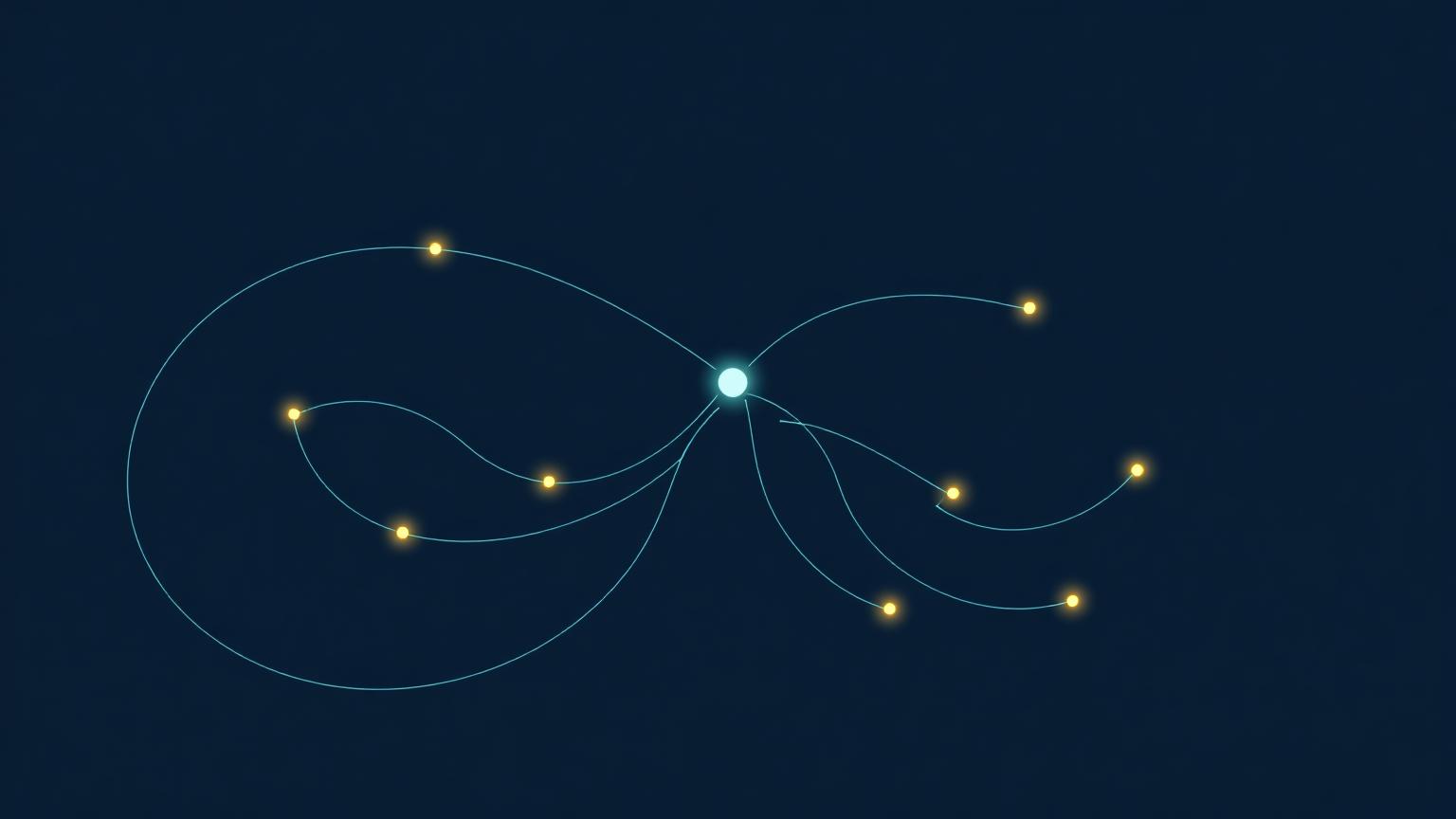
Interactive Inner World Mapping (IIWM) is proposed as an exploratory digital methodology in which personally meaningful concepts—including relationships, goals, values, fears, memories, roles, and priorities—are represented as movable visual objects within an interactive spatial environment.
Unlike static diagrams, IIWM allows these objects to evolve over time. Their position, relative distance, size, grouping, and connections may change as an individual’s internal experience changes.
Instead of asking only:
“How do I feel today?”
IIWM additionally asks:
- What currently occupies the center of my life?
- Which relationships have become more distant?
- Which priorities have grown?
- Which fears are expanding?
- What patterns emerge across time?
The emphasis shifts from recording isolated events toward observing evolving internal structures.
How Is IIWM Different?
| Approach | Primary Focus | Limitation |
|---|---|---|
| Journaling | Written narrative | Difficult to visualize relationships |
| Mood Tracking | Emotional intensity | Limited contextual understanding |
| Mind Mapping | Knowledge organization | Usually not designed for personal psychological reflection |
| Interactive Inner World Mapping | Dynamic representation of the inner world | Requires empirical validation |
Unlike conventional mind maps, IIWM is not intended for brainstorming or knowledge management. Instead, it focuses on representing personally meaningful psychological constructs and their changing relationships.
Relationship to Visual Self-Reflection
Visual Self-Reflection refers to reflective processes supported by images, symbols, diagrams, spatial organization, or other visual representations.
Research in cognitive psychology suggests that visual representations may reduce cognitive load and facilitate organization of complex information.
Within IIWM, visual interaction becomes an active component of reflection rather than simple illustration.
Moving a visual object may encourage users to reconsider personal priorities, relationships, or emotional significance.
Importantly, this does not imply that movement itself changes psychological functioning; rather, it may support reflective thinking that would otherwise remain implicit.
The Role of Artificial Intelligence
Within Life Map AI, artificial intelligence is intentionally positioned as a reflective companion rather than a therapist, diagnostician, or authority.
Its primary functions include:
- asking reflective questions;
- encouraging exploration;
- highlighting possible patterns;
- supporting longitudinal observation;
- facilitating personal meaning-making.
The AI does not diagnose, prescribe treatment, or replace mental health professionals.
This design aligns with current recommendations emphasizing human-centered, ethically responsible AI in mental health applications.
Scientific Foundations
Several established research traditions provide conceptual support for components of IIWM:
Visual Cognition
Research demonstrates that visual representations can improve organization of complex information and reduce cognitive load.
Narrative Identity
Individuals construct personal identity through evolving life narratives integrating past, present, and anticipated future experiences.
Ecological Momentary Assessment
Repeated observations over time provide more ecologically valid information than retrospective recall alone.
Reflective Practice
Structured reflection contributes to learning, professional development, and self-awareness.
These research domains do not directly validate IIWM; however, they offer theoretical foundations upon which the proposed framework is built.
What Remains a Research Hypothesis?
At present, no empirical evidence demonstrates that Interactive Inner World Mapping is superior to journaling, mood tracking, or other established reflective approaches.
The following questions remain open:
- Does visual mapping enhance self-awareness?
- Does spatial organization improve understanding of personal priorities?
- Does AI-supported reflection increase engagement?
- Does longitudinal visual comparison facilitate recognition of personal change?
- Which populations benefit most?
These questions require systematic empirical investigation through pilot studies, usability research, and controlled comparative trials.
Life Map AI as an Early Implementation
Life Map AI represents an initial digital implementation inspired by the IIWM framework.
The platform integrates:
- Interactive visual mapping;
- Visual Self-Reflection;
- AI Reflection Companion;
- Longitudinal self-monitoring;
- Personal narrative organization.
Rather than presenting these components as independent features, Life Map AI combines them within a single interactive environment designed to support ongoing reflection.
Whether this integration provides measurable benefits remains an empirical question.
Conclusion
Interactive Inner World Mapping proposes a new conceptual direction for digital self-reflection by emphasizing spatial relationships, visual interaction, longitudinal observation, AI-supported reflection, and narrative organization within a unified environment.
Life Map AI should therefore be understood not as a validated psychological intervention, but as an exploratory research platform intended to investigate whether these combined elements can meaningfully support reflective practice.
Future studies—including larger pilot investigations, usability evaluations, and controlled comparisons with traditional reflective methods—will be necessary to evaluate the validity and practical usefulness of this proposed framework.