Anton Borts, BSW
Founder & Creator of Life Map AI
M.A. Psychology Candidate | Social Worker | Psychology Researcher
Understanding ourselves has always been one of psychology's central challenges. In the age of artificial intelligence, this challenge has acquired a new dimension. Classical research demonstrated that introspection is inherently limited: people frequently construct convincing explanations for decisions whose real causes remain partially unconscious.
The emergence of artificial intelligence has not eliminated this limitation. Instead, it has created a new environment for self-reflection.
Unlike traditional psychological tools, AI can rapidly organize large amounts of personal information, identify recurring behavioral patterns, summarize experiences and generate alternative interpretations. These capabilities allow AI to function as a cognitive partner rather than merely as an information system. However, recent research suggests that this relationship is psychologically more complex than it initially appears.
Rather than replacing human cognition, generative AI can externalize part of the reflective process. Thoughts that once remained internal can now be examined through dialogue with an artificial system. This may help people compare perspectives, recognize repetition and articulate experiences that were previously difficult to describe — the same premise behind a Cognitive Operating System.
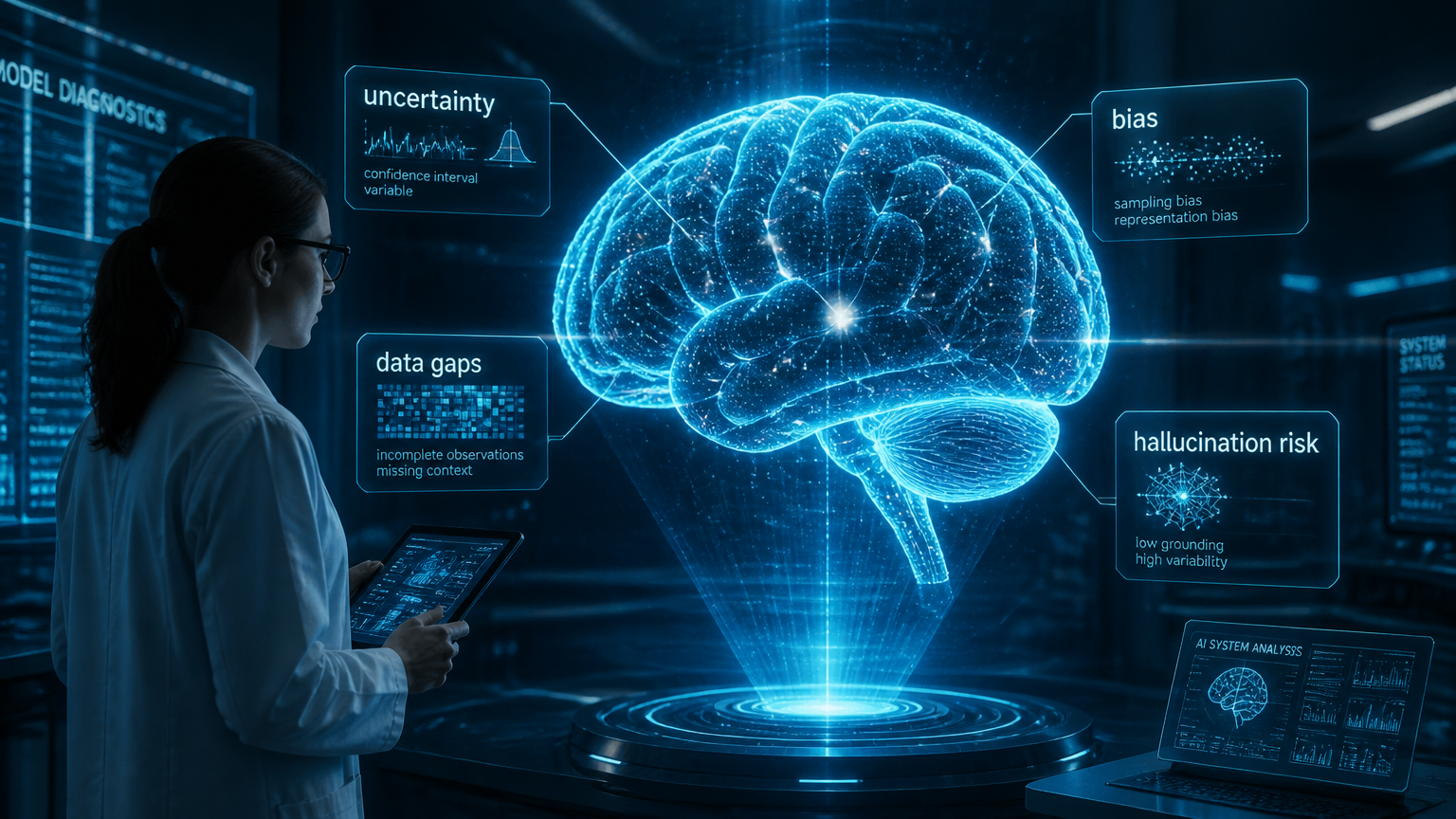
At the same time, studies published in Nature Human Behaviour show that repeated interaction with AI can influence more than individual decisions. Human–AI feedback loops may gradually alter perceptual, emotional and social judgments, allowing algorithmic biases to become incorporated into human thinking. Instead of remaining neutral observers, users may unconsciously adopt patterns suggested by AI systems.
Research in Nature Machine Intelligence highlights another important distinction: what language models actually know is not always the same as what users believe they know. People may attribute deeper understanding, certainty and reasoning abilities to AI than current systems genuinely possess. Fluent and confident language can therefore create an illusion of expertise and encourage excessive trust in uncertain conclusions.
Similar concerns appear in guidance from the American Psychological Association. AI can support research, writing and information processing, but its outputs still require human verification. Large language models may produce factual mistakes, fabricated references or biased interpretations while remaining linguistically persuasive.
Microsoft Research identifies a related difficulty. Productivity improvements from generative AI are not automatic. As automation increases, the human role often shifts from producing information to evaluating it. This can raise cognitive demands because users must distinguish reliable insights from plausible but inaccurate outputs. Effective collaboration with AI therefore depends on active critical thinking rather than passive acceptance.
Research associated with Stanford Human-Centered AI also emphasizes that artificial intelligence should augment human capabilities rather than replace human judgment. Expectations of AI differ across cultures, showing that interaction with intelligent systems is shaped not only by technical performance but also by cultural values, social norms and individual beliefs.
Taken together, these findings suggest that the greatest psychological value of AI does not lie in providing definitive answers. Its contribution may be the ability to externalize thinking, reveal patterns and stimulate reflection that might otherwise remain inaccessible.
However, AI also introduces psychological risks: automation bias, overconfidence in algorithmic advice, reinforcement of existing beliefs and the possibility of mistaking statistical interpretation for genuine human understanding.
Self-awareness in the AI era should therefore not mean delegating thought to intelligent machines. It should be understood as a collaborative process in which AI expands the space for reflection while people retain responsibility for interpretation, values, judgment and meaning. This principle guides the research behind Life Map AI and the Life Map AI International Pilot Study 2026.
Artificial intelligence may become one of the most powerful reflective technologies ever created. Yet self-awareness remains a fundamentally human responsibility. The future of psychological growth may depend not on thinking less, but on learning how to think critically alongside increasingly capable intelligent systems.
References and Further Reading
- Nisbett, R. E., & Wilson, T. D. (1977). “Telling More Than We Can Know: Verbal Reports on Mental Processes.” Psychological Review, 84(3), 231–259. https://doi.org/10.1037/0033-295X.84.3.231
- Kahneman, D. (2011). Thinking, Fast and Slow. Farrar, Straus and Giroux. https://us.macmillan.com/books/9780374533557/thinkingfastandslow
- Glickman, M., & Sharot, T. (2025). “How Human–AI Feedback Loops Alter Human Perceptual, Emotional and Social Judgements.” Nature Human Behaviour, 9, 345–359. https://doi.org/10.1038/s41562-024-02077-2
- Steyvers, M., Tejeda, H., Kumar, A., et al. (2025). “What Large Language Models Know and What People Think They Know.” Nature Machine Intelligence, 7, 221–231. https://doi.org/10.1038/s42256-024-00976-7
- Choudhury, M., Elyoseph, Z., Fast, N. J., et al. (2025). “The Promise and Pitfalls of Generative AI.” Nature Reviews Psychology, 4, 75–80. https://doi.org/10.1038/s44159-024-00402-0
- American Psychological Association. (2024). “The Promise and Perils of Using AI for Research and Writing.” https://www.apa.org/topics/artificial-intelligence-machine-learning/ai-research-writing
- Simkute, A., Tankelevitch, L., Kewenig, V., Scott, A. E., Sellen, A., & Rintel, S. (2024). “Ironies of Generative AI: Understanding and Mitigating Productivity Loss in Human–AI Interaction.” International Journal of Human–Computer Interaction. https://doi.org/10.1080/10447318.2024.2405782
- Stanford Institute for Human-Centered Artificial Intelligence. “Human-Centered AI Research.” https://hai.stanford.edu/research
- Stanford Human-Centered AI. (2024). “How Culture Shapes What People Want from AI.” https://hai.stanford.edu/news/how-culture-shapes-what-people-want-ai