Life Map AI
Life Map AI
Back to Research
Research Publication Library

Publications

Research articles, working papers and methodological publications related to Life Map AI, Interactive Inner World Mapping and Visual Self-Reflection.

About this library

Life Map AI Publications explores the human mind from multiple perspectives — cognitive psychology, memory, digital wellbeing, decision-making, education, and human–AI interaction — all connected through the Cognitive Operating System.

Cognitive Operating System hub

Cognitive Operating System

Essays on the Cognitive Operating System — a human-centered direction for AI that supports self-understanding.

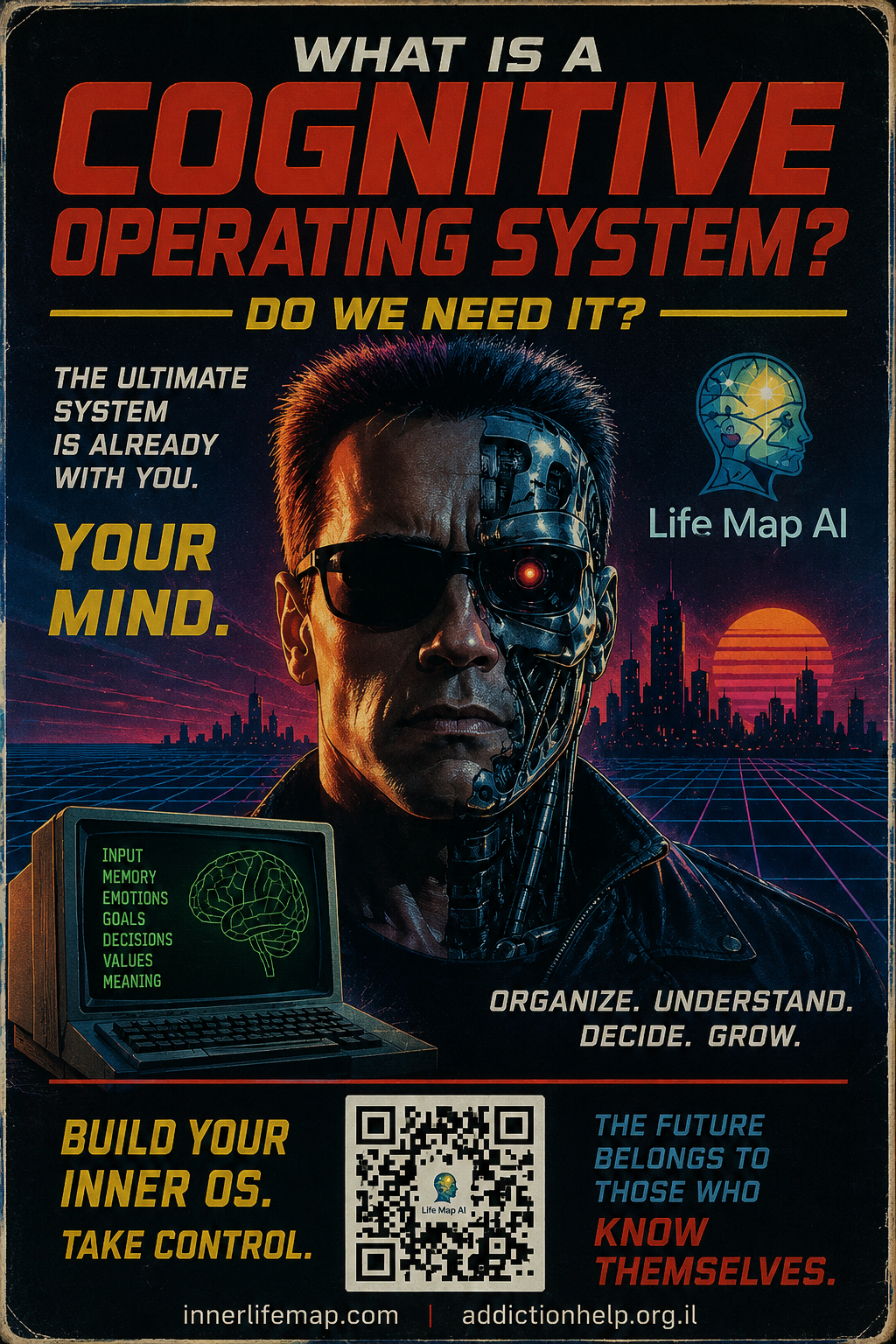
  • Retro sci-fi poster illustrating a Cognitive Operating System — a human interfaced with an inner-world computer screen.
    FeaturedFeatured ArticlePublished14 min read

    What Is a Cognitive Operating System? A New Layer for Human Self-Understanding in the Age of AI

    A Cognitive Operating System is a new layer for human self-understanding in the age of AI — an editable inner map of memories, emotions, beliefs, values and patterns, built with the person, not by the machine.

    Anton Borts · 2026 · Life Map AI Publications
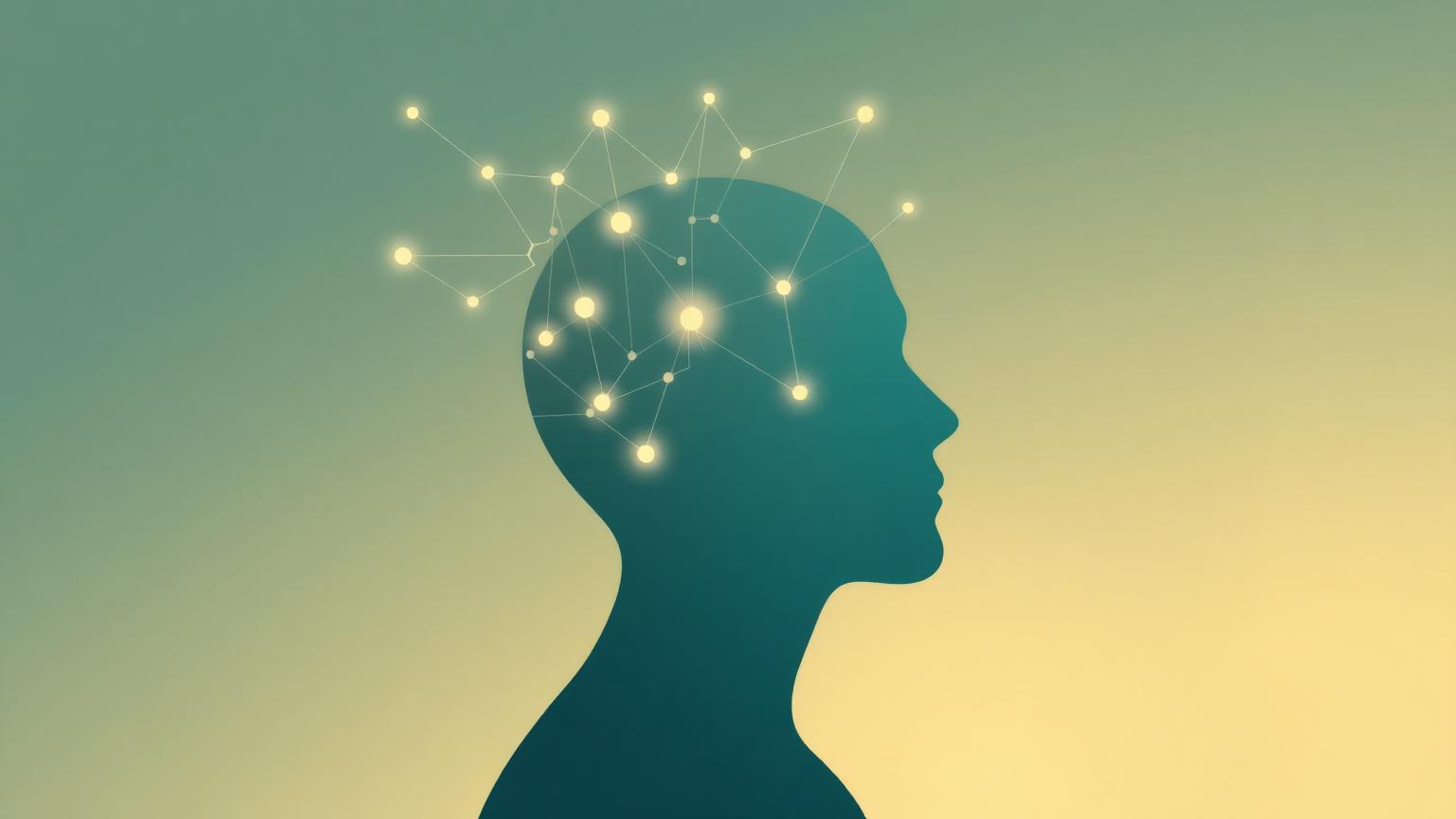
  • A visual representation of a human cognitive system connecting memories, emotions, beliefs, decisions and patterns.
    FeaturedFeatured ArticlePublished8 min read

    Cognitive Operating System: Why Understanding Yourself Is Becoming More Important Than Artificial Intelligence

    A Cognitive Operating System could shift AI from replacing human thought toward helping people understand the memories, emotions, beliefs and patterns shaping how they think.

    Anton Borts · 2026 · Life Map AI Publications
Human–AI Interaction

Interdisciplinary essays on human-centered AI, reflective interfaces, and the boundaries between assistance and replacement.

  • A human figure facing a translucent, mirror-like AI interface of glowing nodes and connections — the person remains visually dominant, illustrating partnership rather than replacement.
    FeaturedFeatured ArticlePublished6 min read

    Can AI Help You Understand Yourself Without Replacing You?

    Artificial intelligence can generate answers, summarize information, and identify patterns. But should it also guide our understanding of ourselves? This article explores a human-centered model of AI-assisted reflection in which technology supports self-awareness without replacing judgment, responsibility, or personal choice.

    Anton Borts · 2026 · Life Map AI Publications

Cognitive Psychology

Essays grounded in cognitive psychology and neuroscience — memory, attention, decision-making — and how they shape a Cognitive Operating System.

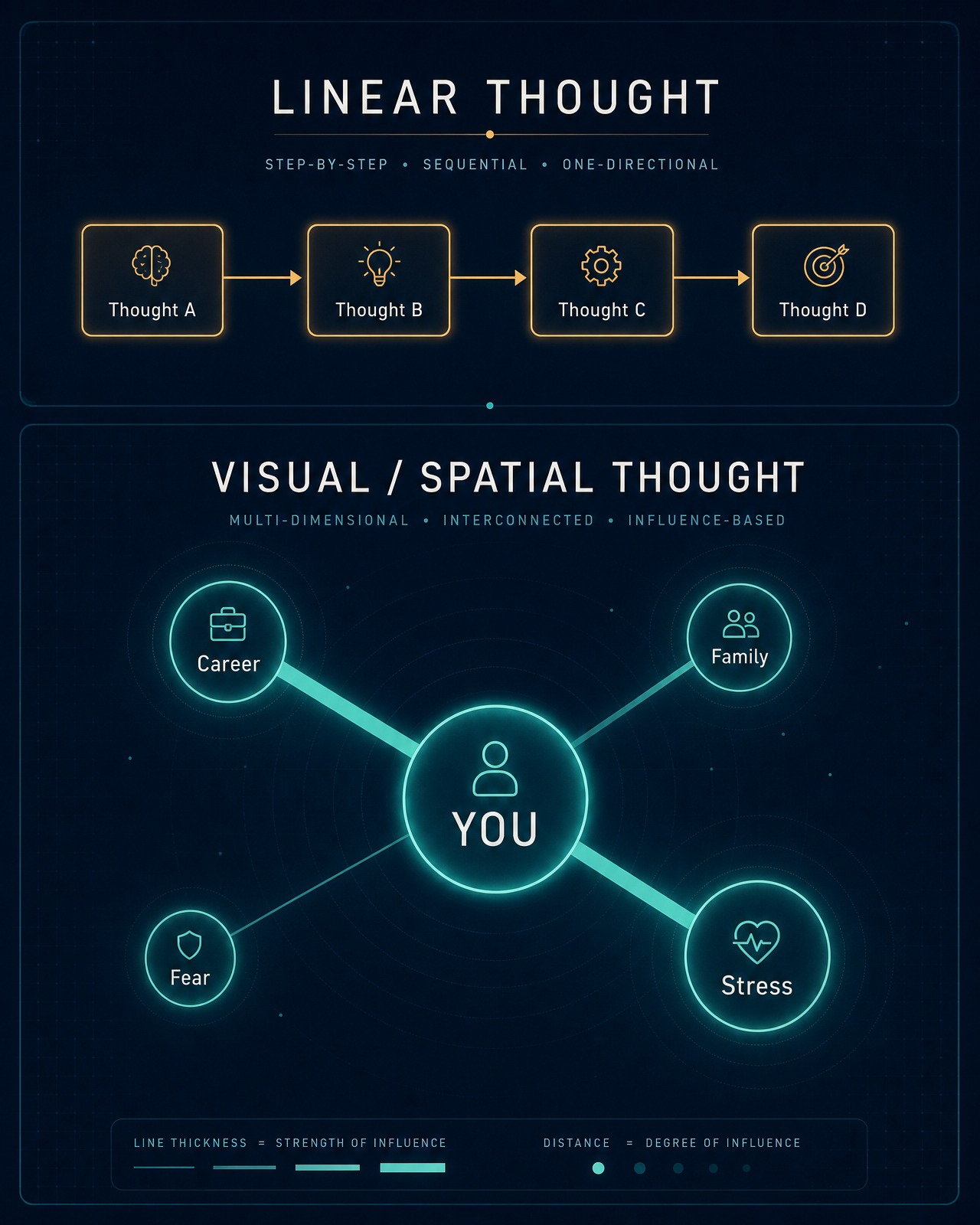
  • Infographic contrasting linear thought as a sequential chain of four nodes with visual spatial thought as a radial map where YOU sits at the center linked to Career, Family, Fear, and Stress.
    ScholarlyArticlePublished5 min read

    What Is Visual Thinking? Spatial Thought vs. Linear Thinking

    Visual thinking uses spatial relationships, size, distance, and links to make complex inner states observable — something linear notes and sequential writing struggle to hold.

    Inner Life Map Team · 2026 · Life Map AI Publications

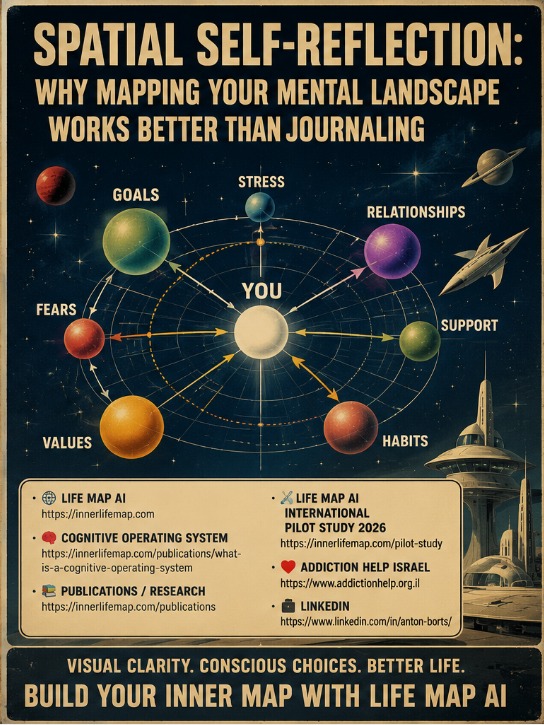
  • Retro space-age poster showing a radial inner-world map: YOU at the center with orbiting nodes for goals, stress, relationships, support, habits, values, and fears.
    ScholarlyArticlePublished4 min read

    Spatial Self-Reflection: Why Mapping Your Mental Landscape Works Better Than Journaling

    Discover how spatial externalization transforms how the brain processes stress, burnout, and internal states compared to linear journaling.

    Inner Life Map Team · 2026 · Life Map AI Publications

  • FeaturedFeatured ArticlePublished6 min read

    Memory Is Not a Recording. It’s a Reconstruction.

    Human memory does not preserve perfect recordings. It reconstructs experience through emotion, context, identity, and present understanding — and this matters for a Cognitive Operating System.

    Anton Borts · 2026 · Life Map AI Publications
Visual Thinking

Essays on visual thinking, spatial cognition, and external representations — and how seeing structure can support reflection, decisions, and personal clarity.

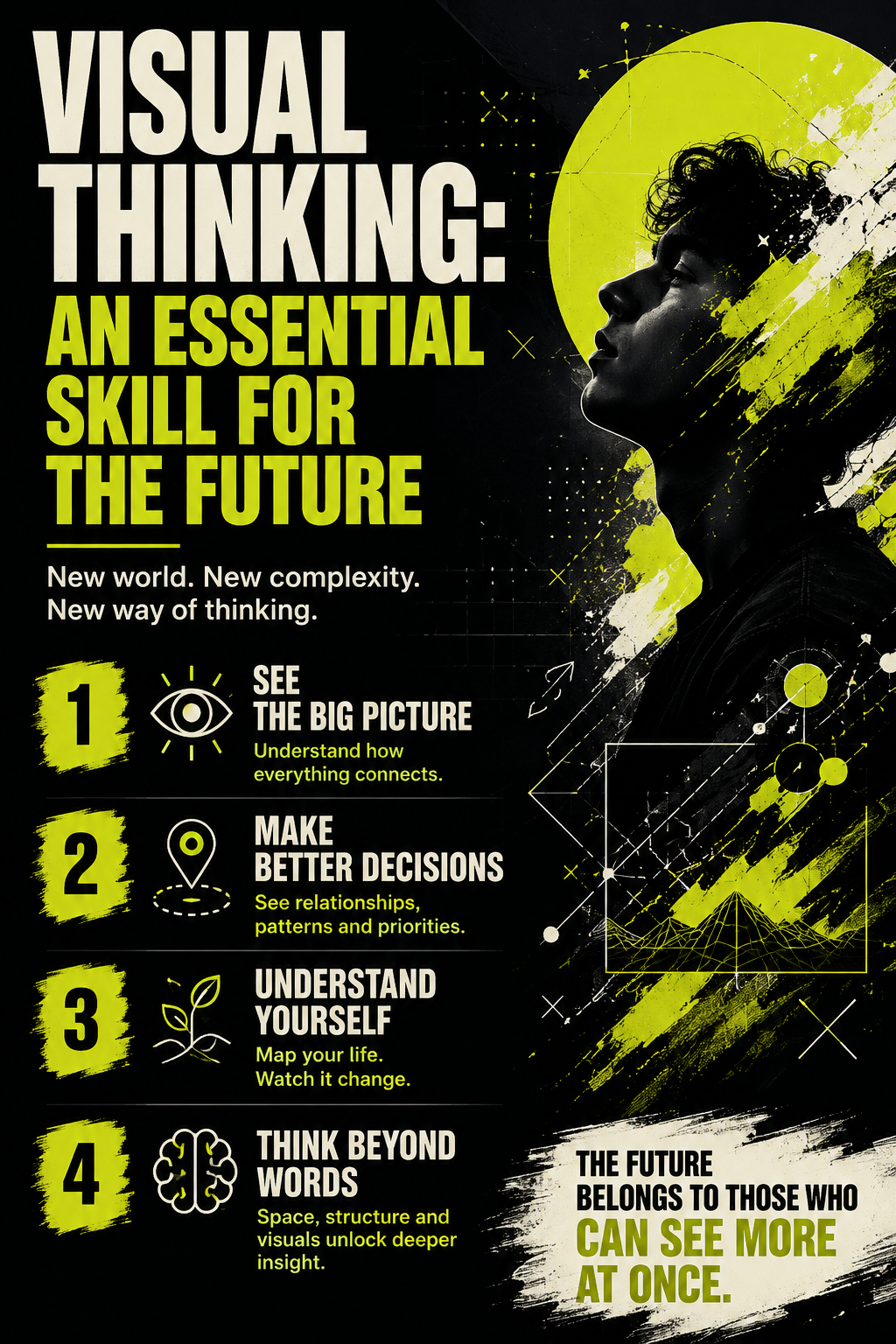
  • Poster: 'Visual Thinking — An Essential Skill for the Future', with a profile of a person looking upward and four numbered points.
    ScholarlyArticlePublished6 min read

    Visual Thinking: Why It May Become an Essential Skill for the Future

    Why visual thinking may become a core human skill in the age of AI — helping us organize complexity, see relationships, and reflect beyond linear text.

    Anton Borts · 2026 · Life Map AI Publications
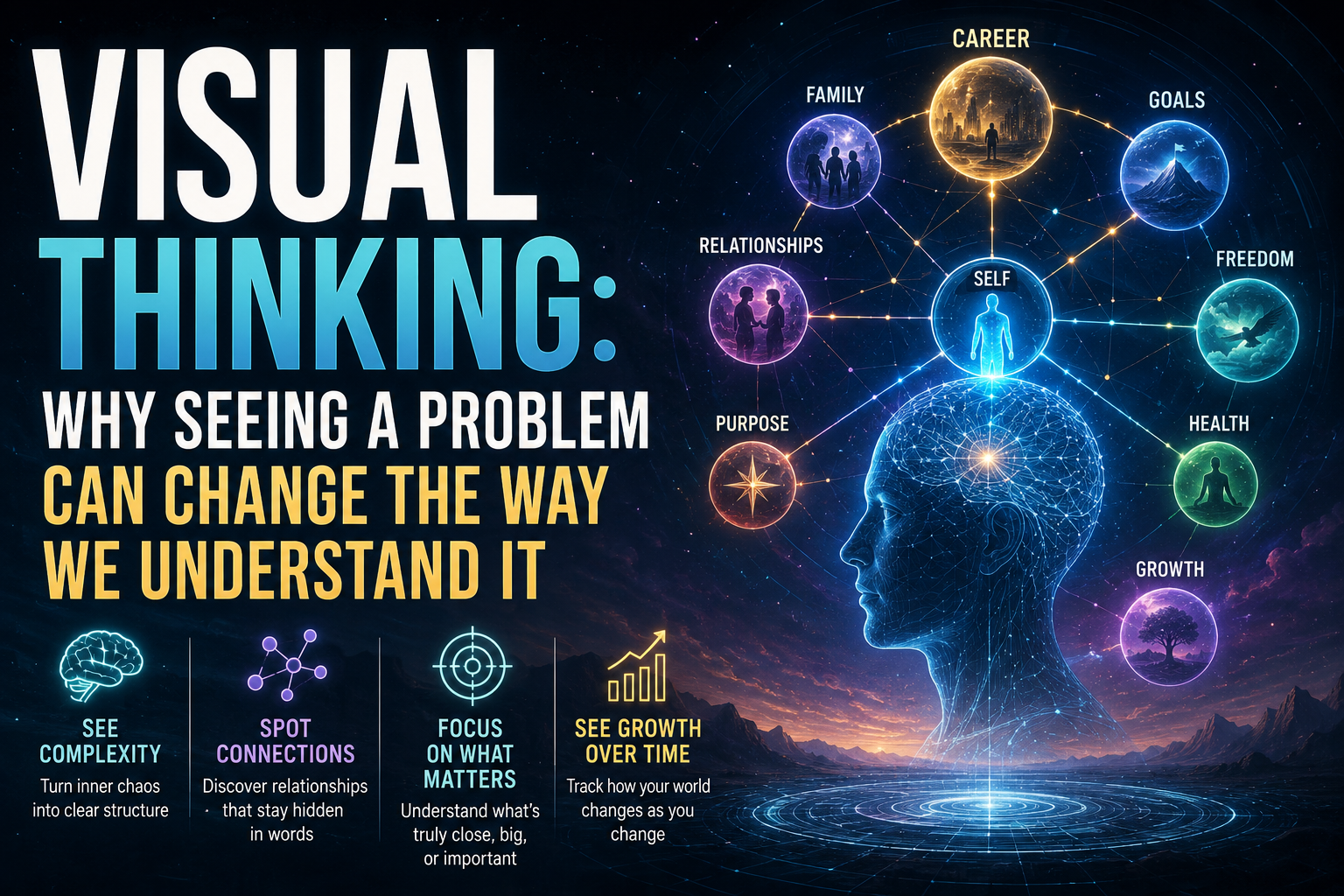
  • Visual thinking: a spatial map of Career, Family, Health, Purpose and Growth arranged around Self.
    ScholarlyArticlePublished6 min read

    Visual Thinking: Why Seeing a Problem Can Change the Way We Understand It

    How spatial representation externalizes complexity, reduces working-memory load, and turns self-reflection into something you can observe and revise.

    Anton Borts · 2026 · Life Map AI Publications
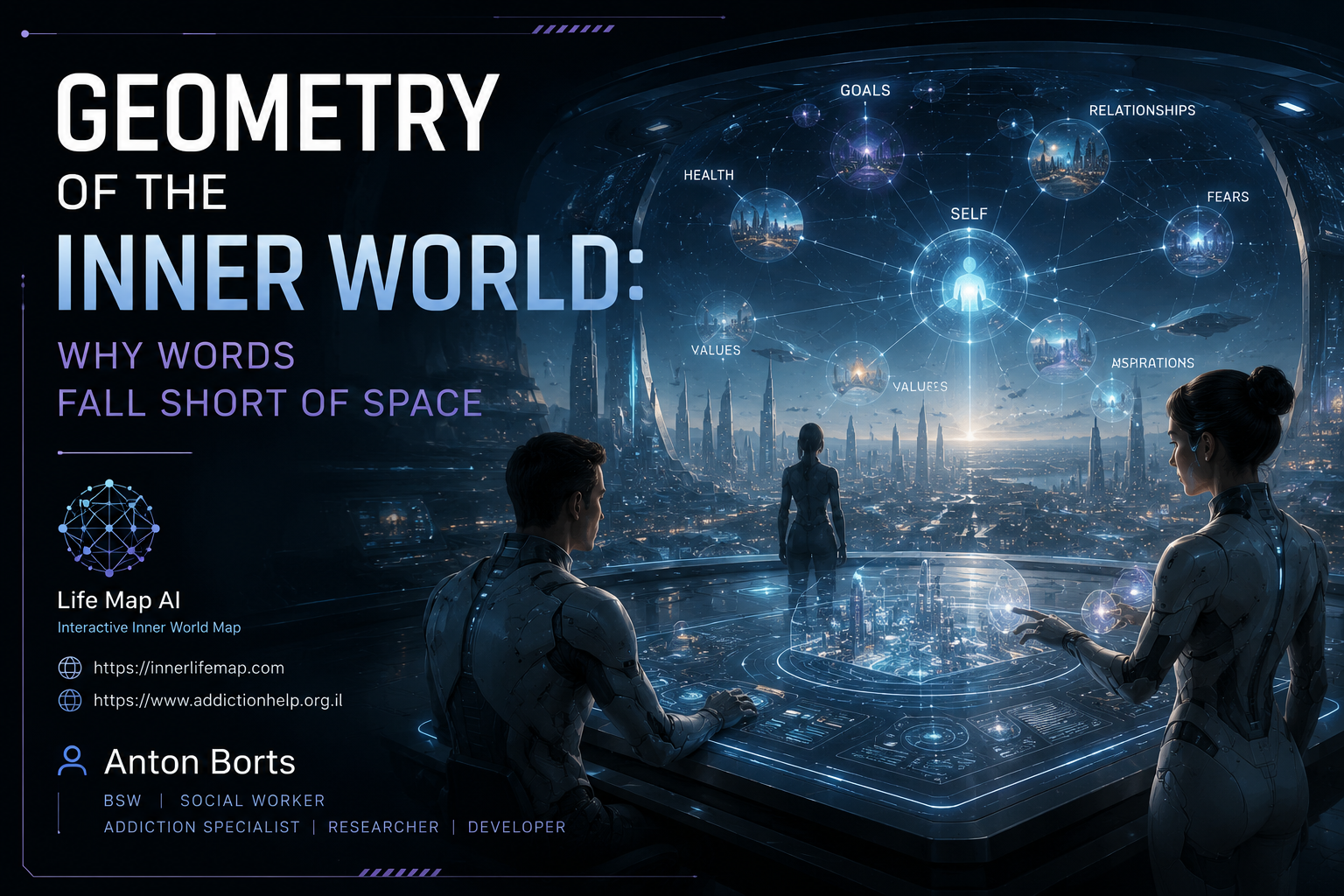
  • Geometry of the Inner World: a spatial map of inner-world objects such as Self, Health, Goals and Relationships.
    ScholarlyArticlePublished4 min read

    Geometry of the Inner World: Why Words Fall Short of Space

    Why linear text creates cognitive overload and how spatial visualization transforms self-reflection.

    Anton Borts · 2026 · Life Map AI Publications
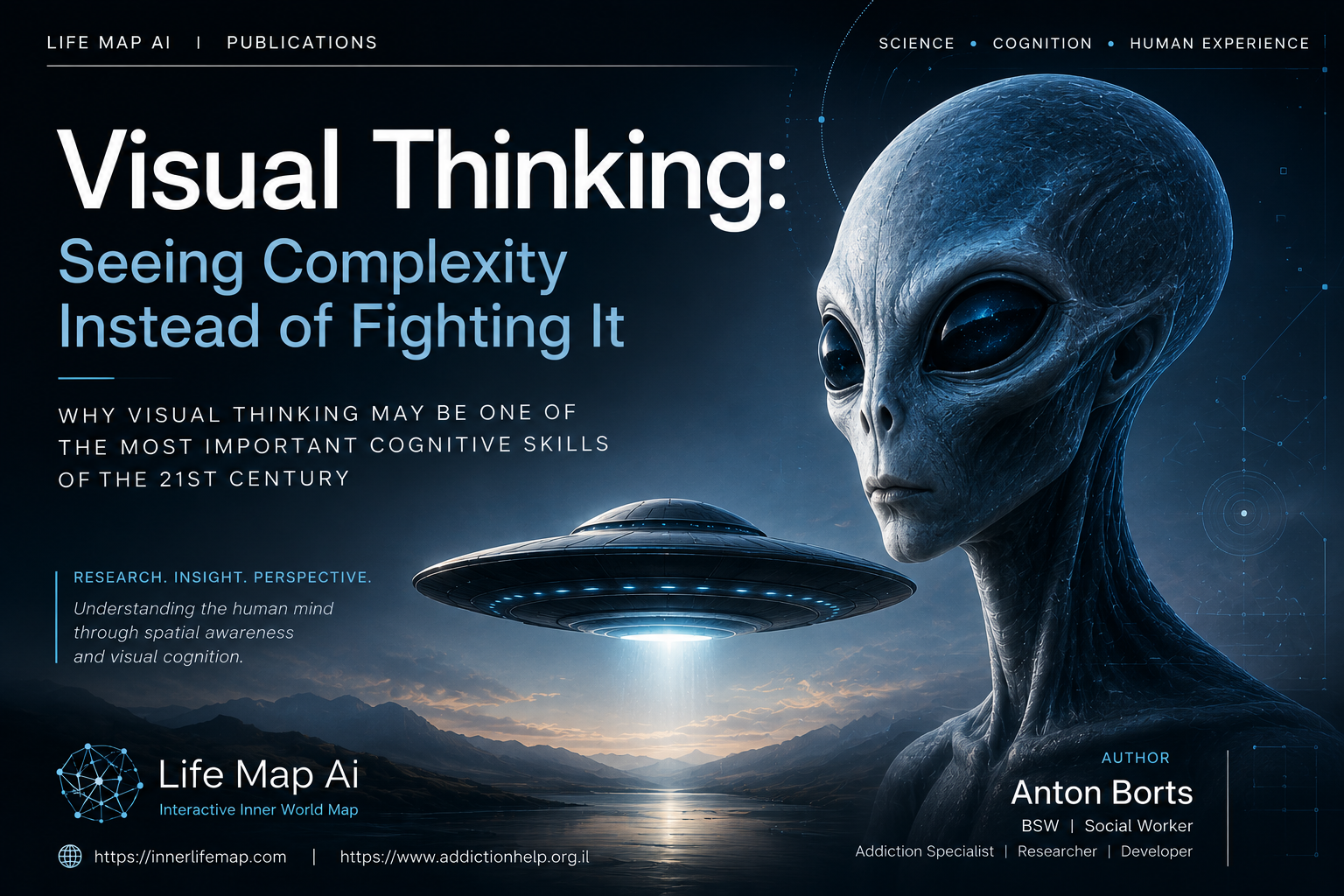
  • Life Map AI publications cover: 'Visual Thinking — Seeing Complexity Instead of Fighting It', with a dark blue science-fiction landscape, a hovering craft, and a large humanoid figure gazing forward.
    ScholarlyArticlePublished9 min read

    Visual Thinking: Seeing Complexity Instead of Fighting It

    How visual and spatial representations can help us organize complexity, see relationships, and reflect on life from a different perspective.

    Anton Borts · 2026 · Life Map AI Publications
Decision Making

Essays on how humans make repeated decisions, and how memory, emotion, identity, and context shape the choices we return to over time.

  • Decision map showing Startup and Corporate options positioned between the competing core values of Freedom and Security.
    ScholarlyArticlePublished5 min read

    The Decision Map: How to Resolve Internal Conflicts When You’re Torn Between Two Paths

    Major decisions are rarely blocked by a lack of information. This article explains how spatial decision mapping can reveal the competing values, hidden costs, and possible third paths behind difficult choices.

    Anton Borts · 2026 · Life Map AI Publications
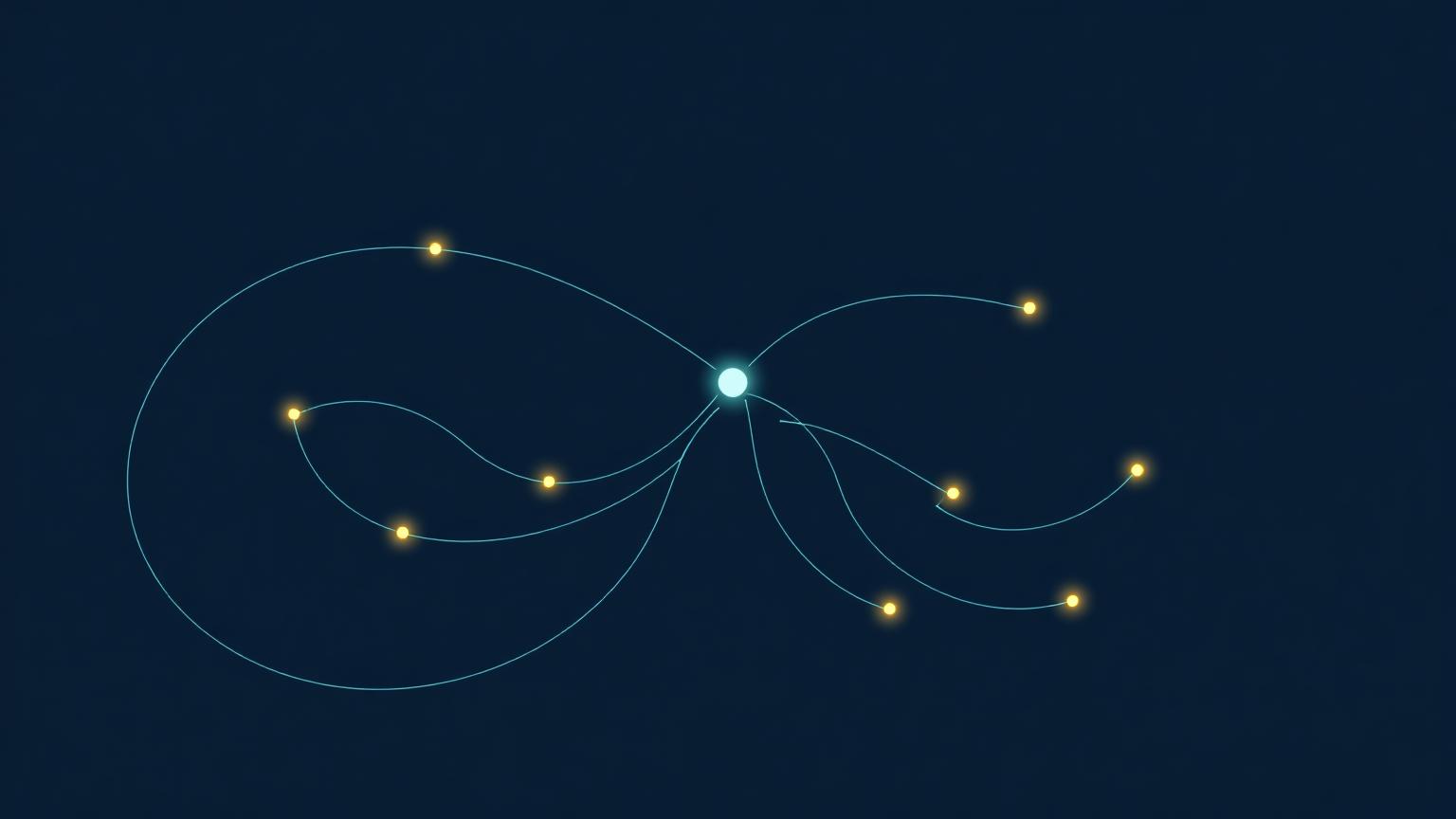
  • A visual map showing several contextual pathways repeatedly converging on the same decision point.
    FeaturedFeatured ArticlePublished11 min read

    Why Do We Keep Making the Same Decisions?

    Repeated choices often emerge from recurring emotional, relational, and psychological configurations — not from a simple lack of knowledge or willpower.

    Anton Borts · 2026 · Life Map AI Publications

Self-Awareness

Essays on self-awareness — how people observe, understand, and rewrite their own recurring mental patterns, narrative loops, and inner stories.

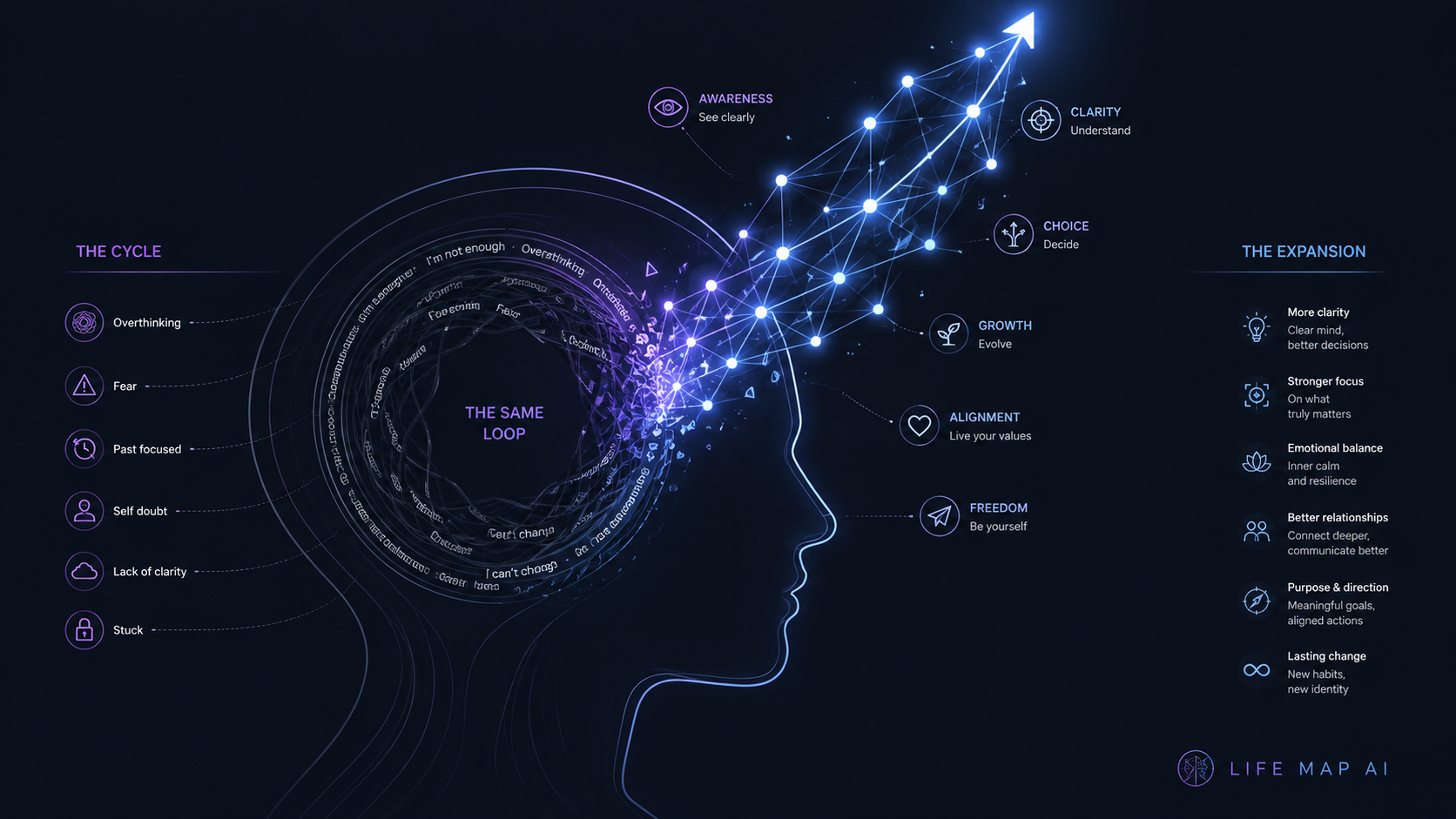
  • A glowing human profile showing a dark repetitive mental loop breaking into an expanding network of awareness, clarity, choice, growth, alignment, and freedom.
    ScholarlyArticlePublished5 min read

    Mapping Narrative Loops: How to Rewrite Your Inner Story

    Recurring thoughts often operate as hidden narrative loops. This article explains how spatial mapping can externalize these patterns, reveal their structure, and help create a deliberate alternative path.

    Anton Borts · 2026 · Life Map AI Publications
AI Ethics & Human Autonomy

Essays on the ethical boundary between personalization and manipulation, and how AI systems can support — or quietly erode — human autonomy and self-authorship.

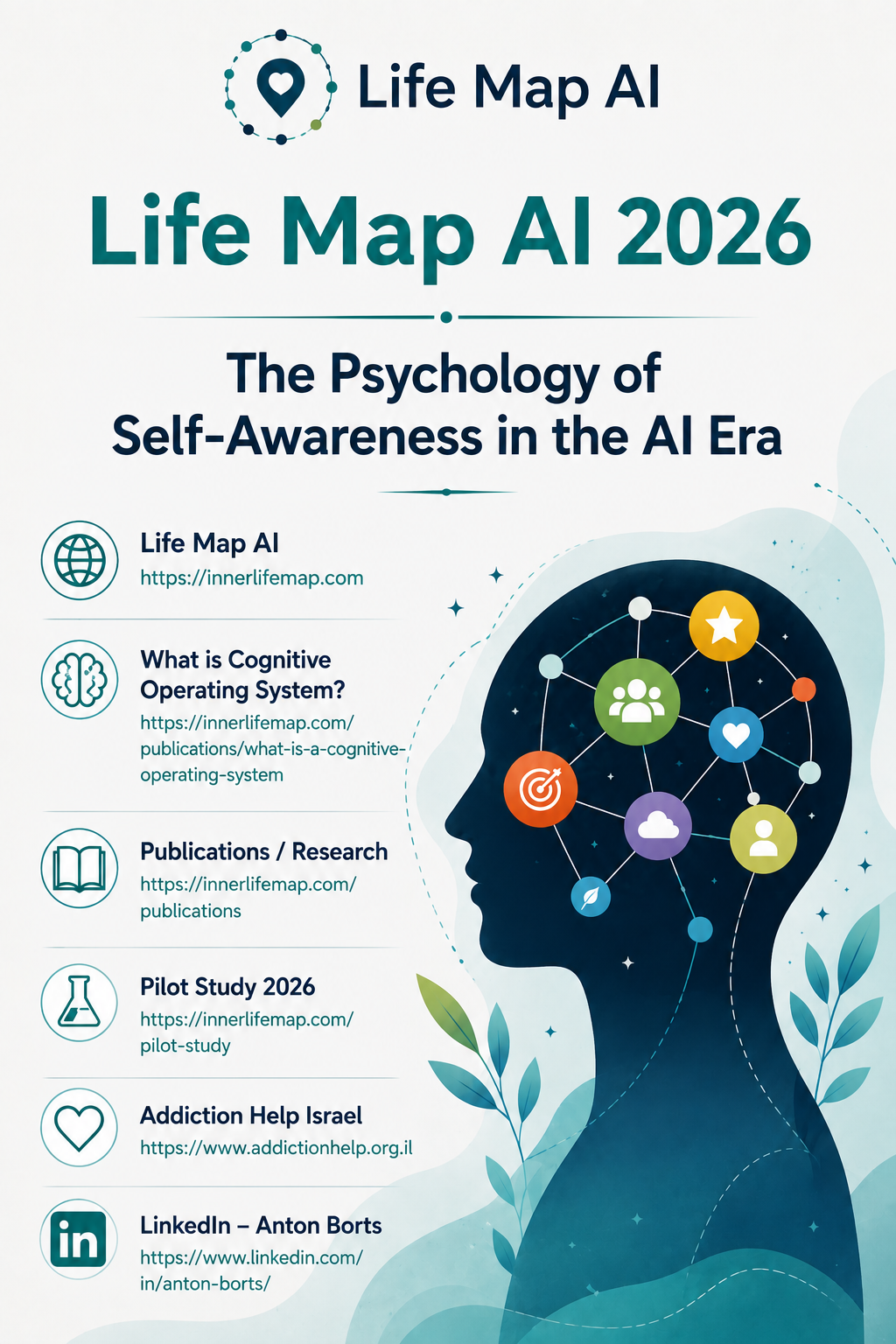
  • Life Map AI research poster for “The Psychology of Self-Awareness in the AI Era”
    ScholarlyArticlePublished5 min read

    The Psychology of Self-Awareness in the AI Era

    Artificial intelligence can help people organize experience and recognize patterns that are difficult to notice alone. Yet AI can also reinforce bias, create excessive trust and influence how people interpret their own thoughts. This article examines self-awareness as a collaborative—but fundamentally human—process in the age of AI.

    Anton Borts · 2026 · Life Map AI Publications
  • A solitary human silhouette standing between an open constellation of glowing decision pathways and a narrowing, directive stream of light — a visual metaphor for the boundary between personalization and manipulation.
    FeaturedFeatured ArticlePublished13 min read

    When Does Personalization Become Manipulation?

    Personalization promises relevance. Manipulation removes choice. Between them lies a shrinking ethical zone that determines whether AI systems support human autonomy or quietly overwrite it.

    Anton Borts · 2026 · Life Map AI Publications
  • ScholarlyArticlePublished5 min readArticle in Russian

    What Will the World with AI Look Like in 10 Years?

    Artificial intelligence may reshape not only technology and professions, but also memory, attention, decision-making, and the way people understand themselves.

    Anton Borts · 2026 · Life Map AI Publications
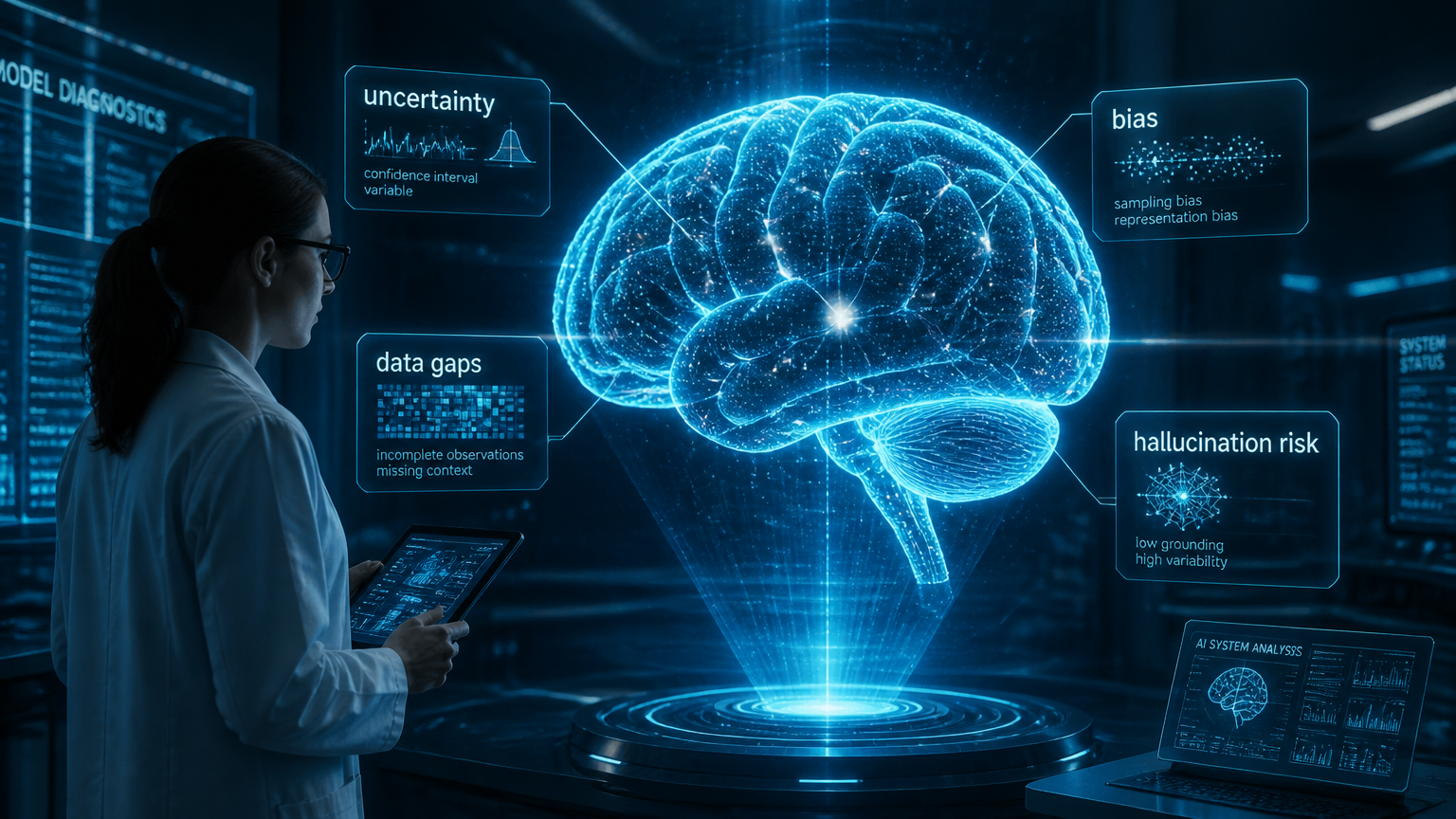
  • A researcher in a futuristic laboratory examines a holographic human brain displaying uncertainty, data gaps, bias, hallucination risk, and other possible AI errors.
    ScholarlyArticlePublished5 min read

    How and Why AI Can Be Wrong

    AI systems can organize information and identify patterns, but they can also hallucinate facts, misunderstand context, inherit bias, and confuse confidence with certainty. This article examines why artificial intelligence can be wrong and why human judgment remains essential.

    Anton Borts · 2026 · Life Map AI Publications

Research Articles

Peer-oriented articles on visual self-reflection, interactive inner-world mapping and AI-supported reflection.

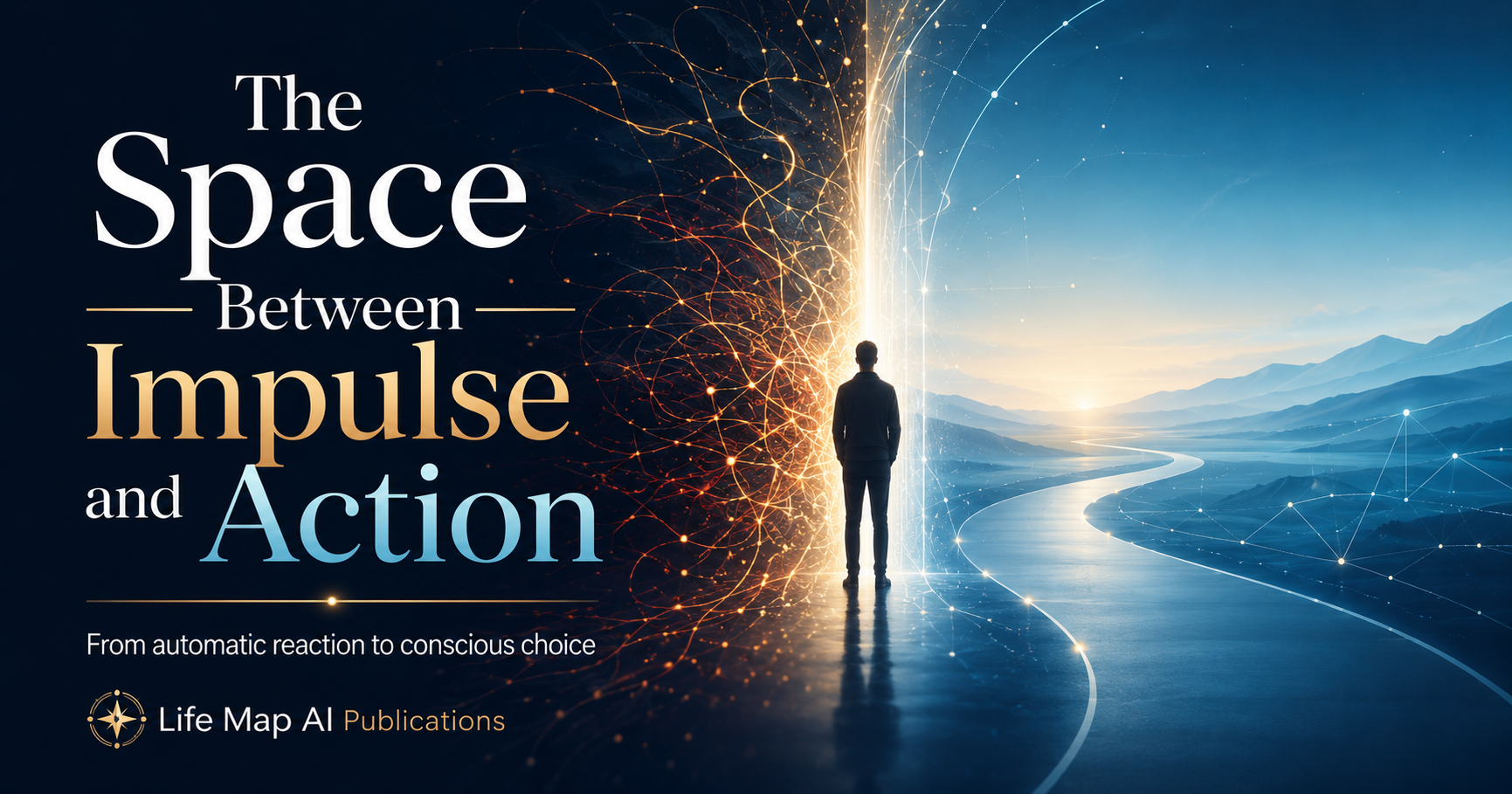
  • The Space Between Impulse and Action — from automatic reaction to conscious choice
    FeaturedScholarlyArticlePublished9 min read

    The Space Between Impulse and Action

    Why do familiar reactions happen so quickly? This article explores the psychological space between impulse and action — and how awareness, pause, and alternative responses may support more conscious choice.

    Anton Borts · 2026 · Life Map AI Research

  • Research ArticleIn Review18 min read

    Visual Self-Reflection: A Framework for Interactive Inner-World Mapping

    Introduces the conceptual framework behind Life Map AI, integrating CBT, narrative therapy, art therapy and motivational interviewing into a single visual reflection model.

    Anton Borts · 2026 · Life Map AI Research

Working Papers

Pre-publication drafts sharing early findings, models and theoretical frameworks.

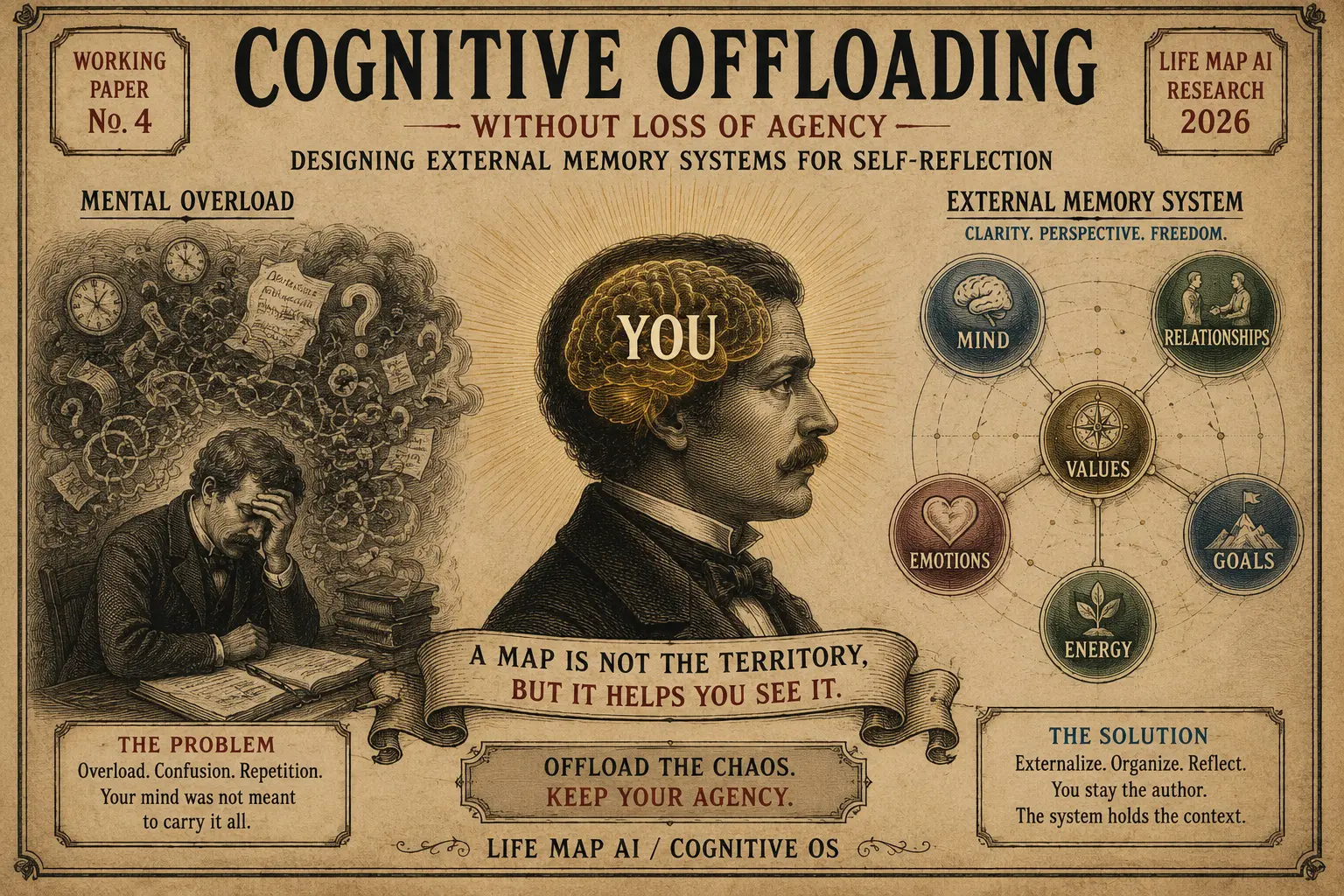
  • Vintage-style infographic contrasting mental overload with an external memory system of Mind, Relationships, Values, Emotions, Goals and Energy.
    FeaturedScholarlyArticleWorking Paper8 min read

    Cognitive Offloading without Loss of Agency: Designing External Memory Systems for Self-Reflection

    How external memory systems can carry the routine work of structuring and storing context, while 100% of interpretation and decision-making stays with the user — the Silent Assistant model behind Life Map AI / Cognitive OS.

    Anton Borts · 2026 · Life Map AI Research

  • Working PaperWorking Paper22 min read

    The Inner World Map: Toward a Computational Model of Personal Meaning

    A working paper describing how relationships, goals, fears, hopes and values can be represented as an interactive map for self-reflection and longitudinal comparison.

    Anton Borts · 2026

Methodology

Methodological notes on how Life Map AI is designed, measured and evaluated.

  • Methodology NotePublished12 min read

    What Is Interactive Inner World Mapping?

    A methodological introduction to Interactive Inner World Mapping — the visual, dynamic approach behind Life Map AI for representing relationships, goals, fears, hopes and values as an editable map for self-reflection.

    Anton Borts · 2026 · Life Map AI Publications
  • Methodology NoteWorking Paper14 min read

    Designing Visual Reflection Tools: Methodology and Measurement Notes

    Methodological notes on how Life Map AI captures visual reflections, measures perceived clarity and evaluates changes over time.

    Anton Borts · 2026

Pilot Studies

Reports and protocols from the Life Map AI International Pilot Study 2026.

  • Study ProtocolPublished10 min read

    Life Map AI International Pilot Study 2026 — Protocol and Design

    Protocol document for the international pilot study exploring feasibility, acceptability and self-reported outcomes of visual self-reflection with Life Map AI.

    Anton Borts · 2026 · Life Map AI

  • Public DocumentPublished6 min read

    Pilot Study — Participant FAQ and Ethics Overview

    Public FAQ summarising participant rights, data protection, ethics and non-clinical scope of the Life Map AI pilot study.

    Anton Borts · 2026

Conference Presentations

Talks, posters and slides presented at academic and professional venues.

  • PresentationComing Soon8 min read

    Interactive Inner-World Mapping: A Presentation on Visual Self-Reflection

    Slides introducing Life Map AI's approach to visual reflection, prepared for academic and professional audiences interested in digital mental health.

    Anton Borts · 2026

Future Publications

Upcoming work currently in preparation or planned for the coming period.

  • Featured ArticleComing Soon10 min read

    Your Brain Doesn't Need More Information. It Needs Better Organization.

    Information overload isn't a knowledge problem — it's an organization problem. How cognitive load, attention, and repeated behavioral patterns are reshaped when the inner world is externalized as an editable map.

    Anton Borts · 2026 · Life Map AI Publications
  • Planned StudyComing Soon5 min read

    Longitudinal Visual Reflection: Planned Multi-Cohort Analysis

    Planned analysis of repeated Life Map sessions across cohorts to describe change patterns in perceived clarity, priorities and inner-world composition.

    Anton Borts · 2026

Explore the Cognitive Operating System
Research
Pilot Study 2026
About Anton Borts