Anton Borts, BSW
Founder & Creator of Life Map AI
M.A. Psychology Candidate | Social Worker | Psychology Researcher
Artificial intelligence has become fluent enough to sound like it understands us. It can summarize a journal entry, complete a difficult sentence, or produce a confident interpretation of a mood. The more capable it becomes, the more tempting it is to hand over the work of self-understanding to a system that appears to do it faster and more articulately than we can. This article argues that self-understanding is exactly the kind of work AI should not take away from us — and that a different design posture, in which AI helps us think rather than thinking for us, is both possible and necessary.
The Difference Between Assistance and Replacement
Assistance and replacement look similar from the outside. Both produce an output the user did not have to write. The difference is what happens to the user in the process. Assistance leaves the person more capable of returning to the question on their own; replacement quietly removes the need to. Over time, replacement erodes the very faculty — reflection — that self-understanding depends on.
A tool that helps you think shows you your own material more clearly. A tool that replaces your thinking hands you a conclusion and asks you to accept it. AI is capable of both. Which one it becomes is a design decision, not a technical inevitability.
AI as a Mirror
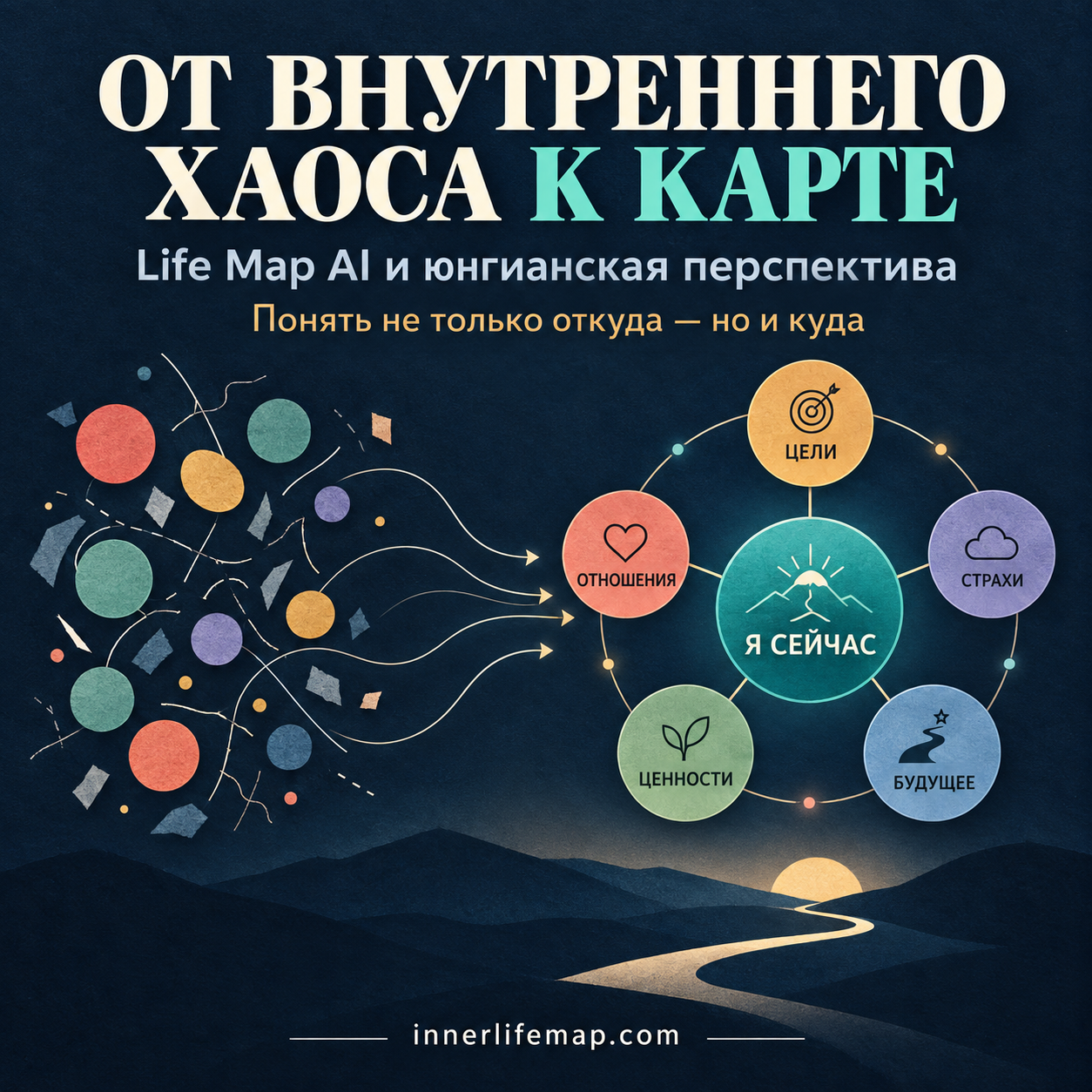
The most human-supportive role AI can play in self-understanding is that of a mirror. A mirror does not tell you who you are; it arranges what you have already expressed so you can see it. In Interactive Inner World Mapping, the map is the mirror: the people, values, emotions, memories and patterns a person places on it are the source material. AI helps the person see the map more clearly — grouping, contrasting, revisiting — but never overwrites what the person has authored.
A mirror is useful because it does not argue. It reflects. What the person does with the reflection remains theirs.
Pattern Recognition Without Authority
Machine-learning systems are good at spotting repetitions across many entries and many weeks. Used carefully, this is a real gift: a person can be shown that four different notes mention the same person, or that a specific value keeps appearing near a specific fear. But pattern recognition is not interpretation. A recurring pattern is a signal — not a diagnosis, not a verdict, and not a life instruction.
Reflective AI must be honest about uncertainty. It should surface what it notices as a possibility, not as a fact about the person. The person is the only one who can decide whether an observation matters, what it means, and what, if anything, to do about it.
Why AI Should Not Become Your Inner Authority
The risk is not that AI is wrong. The risk is that AI is convincing. When a system speaks fluently about our lives, it is easy to defer to it — to let its version of us gradually replace our own. Once that happens, the person stops noticing; noticing becomes something the system does on their behalf.
Self-understanding cannot be delegated. The moment a machine becomes the authority on who you are, you stop being the author. A well-designed reflective system refuses that role. It stays useful precisely by refusing to become the last word.
Reflection Is Different From Diagnosis
Reflective AI is not therapy. It does not diagnose, does not treat, and is not a crisis resource. Its work sits earlier in the process: helping a person notice, organize and revisit their own inner material so that, when they do talk with the people (and professionals) they trust, they arrive with clearer material and better questions.
Reflection asks, “What is happening here, and what does it mean to me?” Diagnosis asks, “What category does this belong to?” The two require different tools, different training, and different accountability. Confusing them harms people.
A Human-Centered Cognitive Operating System
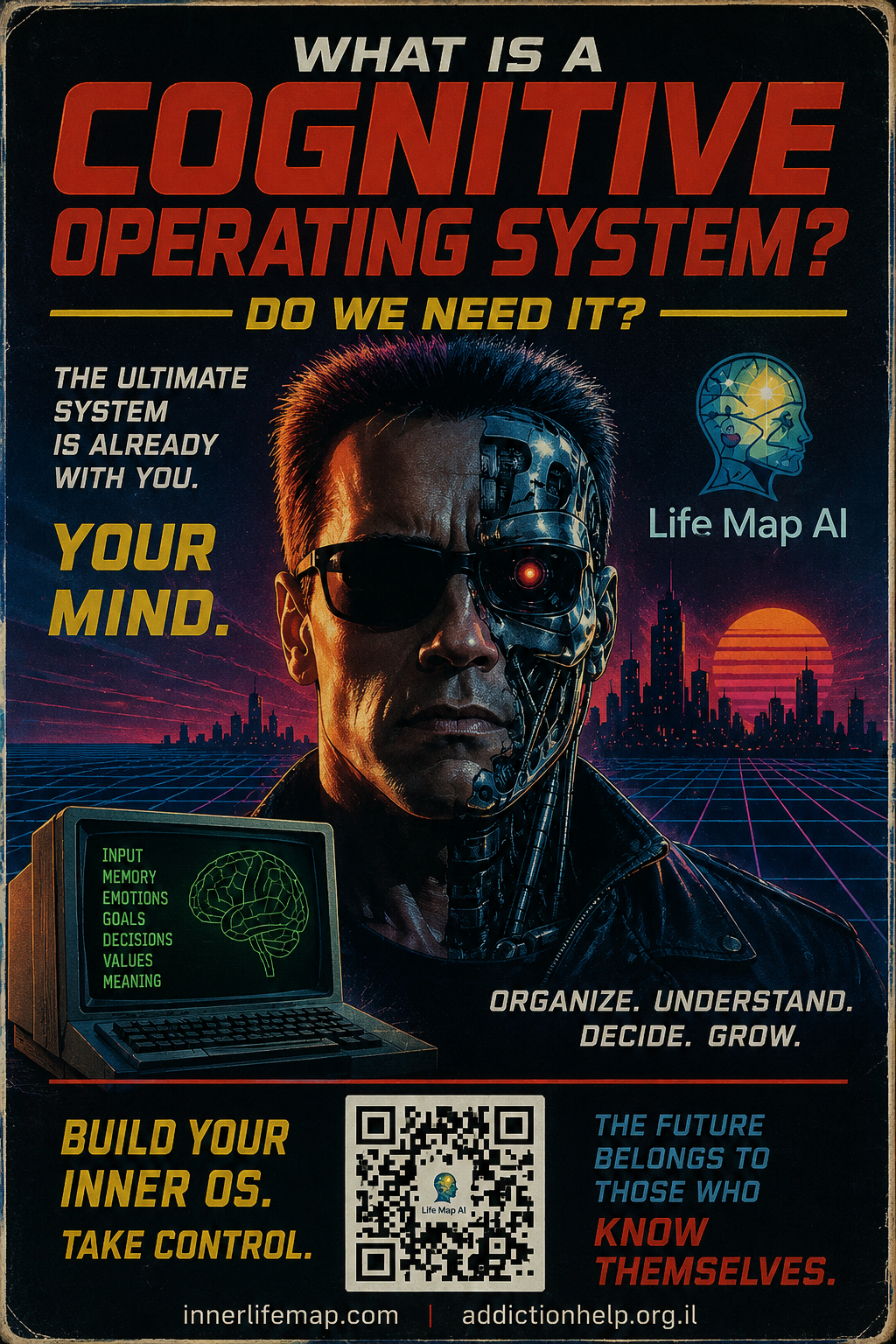
This is why Life Map AI is described as a Cognitive Operating System rather than an answer engine. A Cognitive Operating System is a persistent, editable layer where a person’s inner world becomes visible to themselves. AI is present in that layer, but its role is bounded: organize what the person has placed on the map, point out repetitions and shifts over time, ask reflective questions instead of delivering verdicts, and leave interpretation and change with the person.
The human remains the author. The system remains the assistant. That is the arrangement that makes long-term self-understanding possible with AI in the room.
What Good Reflective AI Should Do
- Return the person to their own material rather than substituting for it.
- Prefer questions to conclusions. “What changed between these two entries?” is more supportive than “You are feeling X.”
- Name patterns, not identities. Observations are signals, not verdicts.
- Make disagreement easy. The person must be able to correct the system without friction, so their self-model remains the source of truth.
- Be transparent about limits. Reflective AI is not therapy and should never pretend to be.
- Value slowness. Reflection takes time; the system should not optimize speed at the cost of depth.
Final Thought
Used well, AI can widen the space in which a person meets themselves. Used badly, it narrows that space until there is nothing left to meet. The difference is not in the model; it is in the intention shaping the product.
Artificial intelligence should not replace your thinking. It should help you understand it.
References
- Flavell, J. H. (1979). Metacognition and cognitive monitoring: A new area of cognitive–developmental inquiry. American Psychologist, 34(10), 906–911.
- Schön, D. A. (1983). The Reflective Practitioner: How Professionals Think in Action. Basic Books.
- Shneiderman, B. (2022). Human-Centered AI. Oxford University Press.
- Amershi, S., Weld, D., Vorvoreanu, M., et al. (2019). Guidelines for Human-AI Interaction. CHI Conference on Human Factors in Computing Systems.
- Bender, E. M., Gebru, T., McMillan-Major, A., & Shmitchell, S. (2021). On the Dangers of Stochastic Parrots. FAccT ’21.
- Borts, A. (2026). What Is a Cognitive Operating System? Life Map AI Publications.